
The best earbuds for everyday use are not the ones with the longest spec sheet. They are the ones you forget you are wearing by the time you reach your desk. Most people do not need a frequency response chart, a dozen EQ presets, or spatial audio that sounds impressive in a demo but does nothing for a podcast on a crowded train. They need earbuds that fit, connect without drama, last through the day, and let them take a call without sounding like they are shouting from inside a tunnel.
That sounds like a low bar, but it is not. The everyday earbuds market is full of options that nail one feature and quietly fail at another. I spent years selling these products and even more time returning the ones that did not survive real routines. This guide is for the person who wants to buy once, stop thinking about earbuds, and get back to listening.
What "Just Work" Actually Means for Everyday Earbuds
When people say they want earbuds that just work, they usually mean four things: comfortable fit, stable connection, clear calls, and enough battery to get through a normal day. Everything else is secondary. If a pair of earbuds fails at any of those four, the buyer will notice it every single day.
Fit and Comfort Before Anything Else
An earbud that hurts after forty minutes is a bad earbud, no matter how it measures. Fit depends on the shape of your ear, the weight of the bud, and the tip size. The right fit also improves passive noise isolation, which means you do not need aggressive active noise cancellation just to hear your music on a walk.
I learned this the hard way with a pair of highly rated earbuds that came with tips too large for my ears. The sound was great, but after thirty minutes I wanted to remove them. That is not a compromise worth making for a daily-carry item.
Before buying, check whether the earbuds include multiple tip sizes or a fit test in the companion app. If they do not, think twice. You cannot fix a poor physical fit with a software update.
Connection Stability Over Codec Specs
Wireless earbuds live or die by their connection. A drop during a phone call or a stutter while walking through a busy intersection is more annoying than a slight difference in codec quality. Most people cannot hear the difference between high-end codecs in a real-world environment, but everyone notices when the audio cuts out.
For everyday use, prioritize a stable Bluetooth connection over marketing claims about lossless audio or ultra-low latency. Those features matter for specific uses like competitive gaming or critical listening. They are nearly irrelevant for podcasts, commutes, and casual music.
Call Quality for Real Conversations
Many earbuds sound fine for music but turn your voice into a muffled mess during calls. If you take work calls, walk-and-talk with family, or use voice assistants, call quality matters more than bass extension.
Test the microphone in a realistic setting if possible. A quiet room is not the same as a street with wind or a kitchen with a running faucet. Reviews that only test calls indoors miss the point for most daily users.
Where People Usually Go Wrong
Chasing Active Noise Cancellation by Default
Active noise cancellation is useful, but it is not a reason to buy earbuds on its own. Some people assume they need ANC because it is a highlighted feature, then realize they mostly listen in quiet offices or at home. A good seal from the right ear tips can block a surprising amount of noise without the extra cost and battery drain.
Buying Too Many Features
Feature lists look impressive, but many of them go unused after the first week. Spatial audio, multipoint switching, voice assistant integrations, gesture controls—these sound helpful, but they add complexity. The person who wants earbuds that just work should look for fewer, better-executed features rather than a long list of half-baked ones.
Ignoring the Charging Case Size
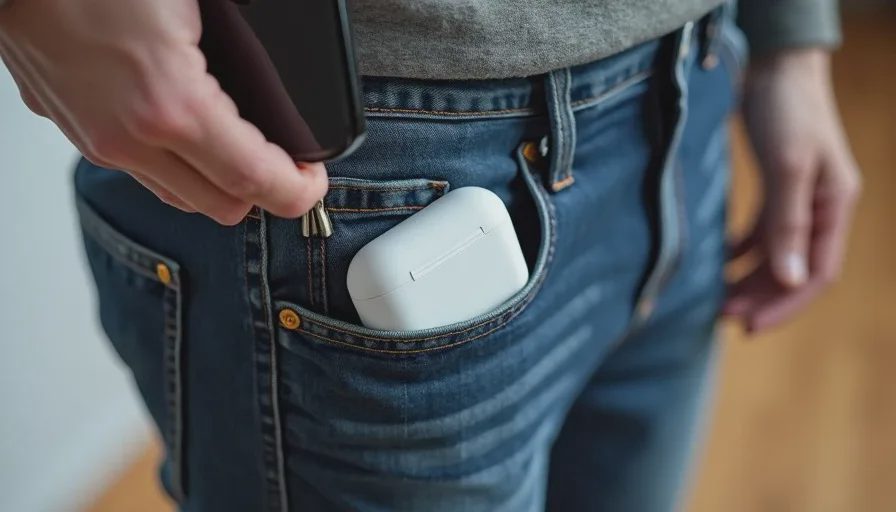
Everyday earbuds live in pockets, bags, and sometimes the coin pocket of jeans. A bulky case becomes a reason to leave the earbuds at home. If the case is too large to carry comfortably, the purchase stops being an everyday carry item and becomes a desk accessory.
A Simple Buying Checklist for Everyday Earbuds
Here is the checklist I use when someone asks me how to choose wireless earbuds for normal daily use. It is intentionally short.
Do they fit comfortably for at least an hour without adjustment?
Do they stay connected during typical movement and through known dead zones?
Is call quality clear enough for outdoor use, not just indoor testing?
Will the battery last a full day of mixed use without carrying a power bank?
Is the charging case small enough to carry every day without annoyance?
Do they pair easily with the phone, tablet, and laptop you already use?
Are the controls limited to the two or three actions you actually repeat?
If the answer to any of these is no, the earbuds will eventually frustrate you—even if they sound great.
The Tradeoffs You Accept at Different Price Points
Budget earbuds can handle the basics, but they often cut corners on call quality or battery consistency. That does not mean they are bad. It means the buyer should accept that pairing might take an extra second or the case might feel a little cheaper.
Midrange earbuds usually deliver the best balance for daily use. Fit, connection stability, and battery life tend to improve without adding a massive price jump. This is where most people should stop looking unless they have a specific requirement.
Premium earbuds add refinements like better ANC, more polished mics, and higher-quality materials. Those improvements are real, but they matter less for a typical Tuesday than the marketing suggests. Paying more only makes sense if you use the extras often enough to justify the cost.
Final Advice: Buy for Your Most Repeated Routine
The best everyday earbuds are not chosen in a store or a review video. They are chosen by matching the product to the routine you repeat most. If you commute by train, prioritize fit and passive isolation. If you take calls at a desk, prioritize microphone clarity. If you run outdoors, prioritize a secure fit and some awareness of surroundings.
Before you buy wireless earbuds, write down the three situations where you will use them most. Then ignore every feature that does not serve one of those situations. That single step will filter out more bad purchases than any comparison chart.
Buy for how you live, not for how it looks on the spec sheet. The right earbuds disappear into your day. The wrong ones become one more thing you tolerate—or leave in the drawer.