
The price tag is the first cost you see, but it is rarely the last one you pay. When you buy a device that does not match your routine, you pay a second, quieter cost every time you use it—or every time you avoid using it. This cost does not show up on a receipt. It shows up in the extra minutes spent adapting, the small frustrations that repeat daily, the drawer space taken up by something you never reach for, and the background awareness that you made a choice that was not quite right.
I have paid this cost more times than I care to admit. A tablet that was too heavy for reading in bed. Earbuds that sounded great but hurt after forty minutes. A phone with features I never touched but paid for anyway. None of these purchases was a disaster. Each one was just slightly wrong. But slightly wrong, repeated every day, becomes a quiet tax on your time and attention. The quiet cost of buying devices that do not match your routine is often larger than the money you spent.
What the Quiet Cost Actually Is
The quiet cost is not the same as buyer's remorse. Buyer's remorse is loud and immediate. You know you made a mistake, and you feel it the moment you open the box. The quiet cost is different. It is subtle, gradual, and easy to ignore because it never announces itself. It accumulates in the background.
The Cost of Adaptation
Every device has a way it wants to be used. A keyboard wants a certain hand position. An app wants a certain workflow. A pair of earbuds wants a certain fit. When the device does not match your routine, you spend extra effort adapting yourself to it. You change your grip, adjust your posture, find workarounds, and remember small limitations. That effort is real. It drains energy that should go somewhere else.
The Cost of Maintenance
Devices that do not fit your routine often require more maintenance. A phone with too little storage forces weekly cleanup. A tablet that is too heavy to carry easily gets left behind and then needs charging before every use. Earbuds that do not fit well need constant adjustment and more frequent cleaning. None of these tasks is hard on its own, but together they add up.
The Cost of Avoidance
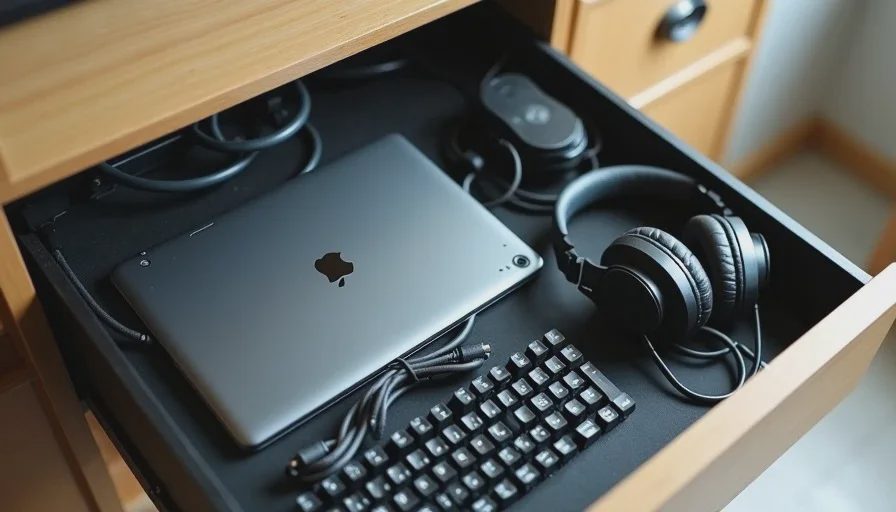
The most honest sign of a bad match is avoidance. You choose the older device instead of the new one. You leave the heavy tablet at home and use your phone. You skip the fancy earbuds and grab the cheap wired pair because they are easier. The device you bought is still there, still paid for, still taking up space—but it is not serving you. The money is gone, and the value never arrives.
Common Ways People Buy the Wrong Device
Buying for an Imagined Future Self
The most common trap is buying for the person you want to be, not the person you are. You buy the tablet with a desktop-class chip because you imagine editing video on the couch. You buy the running watch with advanced training metrics because you imagine training for a marathon. You buy the mechanical keyboard with customizable layers because you imagine becoming a power user.
Then real life returns. You do not edit video. You do not train for a marathon. You do not use macros. The device was bought for a future that never arrived, and now it sits as a reminder of that gap.
Following Someone Else's Recommendation
Recommendations are useful, but only when they come from someone whose routine resembles yours. A reviewer who edits 4K video for a living needs a different phone than someone who sends messages and takes family photos. A friend who travels every week needs a different tablet than someone who works from a single desk. The recommendation is not wrong. It is just not yours.
Chasing Specifications Instead of Fit
The spec sheet is easy to compare. Numbers are clean and objective. But specs do not tell you how a device feels in your hand, how it fits in your bag, or how it behaves after three hours of use. A device that looks better on paper can feel worse in daily life. The quiet cost begins when you choose the higher number over the better fit.
Ignoring the Small Daily Irritations
Before buying, most people focus on the big questions: Is it fast enough? Does it have enough storage? Is the battery good? They ignore the small questions: Will it fit in my pocket? Will the earbuds stay in during a walk? Will the keyboard feel natural after an hour? Those small questions determine how the device feels on a normal Tuesday. When they are ignored, the daily irritations begin.
How to Spot a Mismatch Before You Buy
The best way to avoid the quiet cost is to catch the mismatch before the purchase. That takes more than reading reviews. It takes understanding your own routine.
Write Down Your Real Use Cases
Before buying anything, write down the three activities you will do most often with the device. Be specific. "Checking email" is not specific. "Checking email while standing on a moving train" is specific. "Watching videos" is not specific. "Watching videos in bed with the screen propped on a pillow" is specific.
The more specific the use case, the easier it is to match the device to your life. If the device does not serve one of those specific situations, it is not the right device.
Test the Fit, Not Just the Features
When possible, try the device in a setting that resembles how you will actually use it. Put the earbuds in and walk around for ten minutes. Hold the tablet in one hand while standing. Type on the keyboard for a full paragraph. The goal is to feel the device doing the thing you will ask it to do every day.
This is not always possible before buying online, but you can look for reviews that describe real-world use rather than benchmark scores. A review that mentions fit, weight, and daily comfort is worth more than one that focuses on specs.
Ask What You Are Willing to Tolerate
Every device has tradeoffs. The question is not whether the tradeoffs exist, but whether you can live with them. A heavy tablet might be fine if you mostly use it at a desk. A phone with average battery life might be fine if you are near a charger most of the day. A pair of earbuds that need occasional adjustment might be fine for short commutes but not for long runs.
Before buying, name the tradeoff you are accepting. If you cannot name it, you have not thought about it enough. The quiet cost lives in the tradeoffs you ignored.
What to Do When You Already Have a Mismatch
If you already own a device that does not match your routine, you have three options: change the routine, change the device, or change your expectations.
Change the Routine Sometimes Makes Sense
Some mismatches can be fixed by adjusting how you use the device. A tablet that is too heavy for reading in bed can be used with a stand on the nightstand. Earbuds that fall out during runs can be saved for desk use and replaced with a sport pair for running. The device was not wrong; it was just in the wrong role.
Change the Device When the Friction Is Constant
If you have tried adjusting and the friction remains, the better move is to sell, trade, or return the device. It is tempting to keep it because you spent money on it, but that is the sunk cost trap. The money is already gone. Keeping a device you do not use does not recover it. It just adds the quiet cost of clutter and guilt.
Selling a mismatched device recovers part of the cost and removes the daily reminder. It is not a failure. It is a correction.
Change Your Expectations Only as a Last Resort
Telling yourself you will "get used to it" rarely works with a bad match. You can tolerate a slightly imperfect fit, but if the device fights you every day, the frustration will not fade. It will build. Accepting a persistent mismatch is not patience. It is paying the quiet cost indefinitely.
The Real Price of the Wrong Device
The quiet cost is difficult to measure because it never appears on a bank statement. But it is real. It is the time spent looking for a workaround. The energy spent adjusting. The space taken up by something you do not use. The small pang of guilt every time you see it. The decision fatigue of choosing between devices that do not quite work.
These costs seem small in isolation, but they compound. A device you keep for two years but use with daily friction extracts a tax every single day. The $200 you saved by buying the cheaper model might be paid back in frustration within the first month. The $300 you spent on the premium model might never be returned if the features go unused.
The right device is the one that disappears into your routine. You stop noticing it because it does its job without asking for your attention. The wrong device is the one you are always aware of, always adjusting, always working around. That awareness is the quiet cost.
A Simple Rule Before Every Purchase
I use a short rule before buying any tech product now. I ask myself one question: Will this make a normal day easier, or will it add a small task to my life?
If the answer is that it will add a task—something to charge, carry, adjust, or remember—then I need a very good reason to buy it. The best devices remove tasks. They do not add them. A good charger eliminates the search for a charger. A good pair of earbuds eliminates the adjustment. A good tablet eliminates the decision to bring it or leave it.
The wrong device adds a task, and that task repeats every day for as long as you own it. That is the quiet cost, and it is higher than most people realize.

Final Note: Buy for the Day You Actually Have
It is easy to buy for the day you hope to have—the day you edit video, run a marathon, or become a power user. But the quiet cost lives in the day you actually have, the normal Tuesday with the commute, the desk, the dishes, and the messages. That is the day your devices need to serve.
Buy for how you live, not for how it looks on the spec sheet, and not for how it fits an imagined future. The right device for your routine is the one that makes the normal day feel a little easier. The wrong one makes it feel a little heavier. That difference, repeated over time, is the real price of a mismatched purchase.