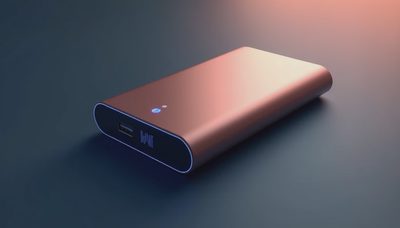
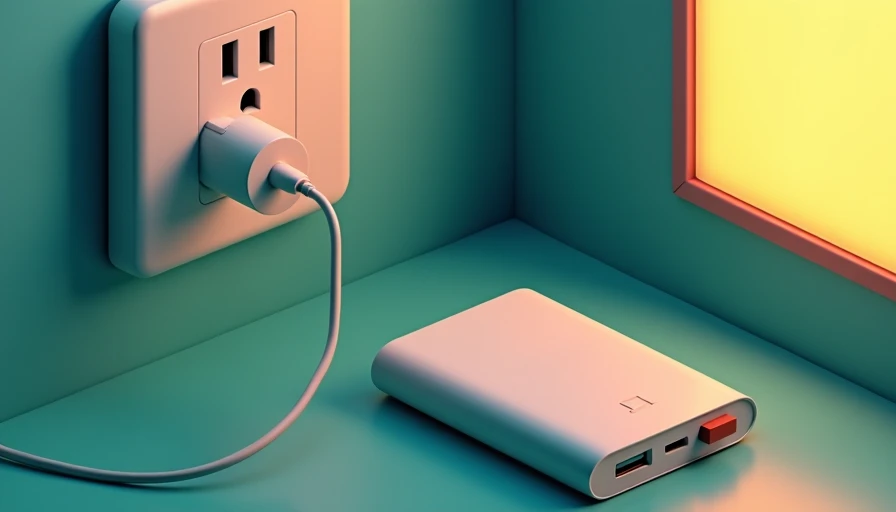
An outlet power bank combines a rechargeable battery with a built-in wall plug, so you can refill your phone without carrying a separate charging brick. That sounds like a small change, but it can remove one of the most annoying parts of daily tech: remembering the battery pack, cable, and adapter as three separate things.
I think this category makes the most sense for commuters, hybrid workers, frequent travelers, and anyone who regularly reaches 20 percent battery before the day is over. It is less useful for someone who already spends most of the day near a wall outlet. Buy for how you live, not for how it looks on the spec sheet.
What an outlet power bank actually does
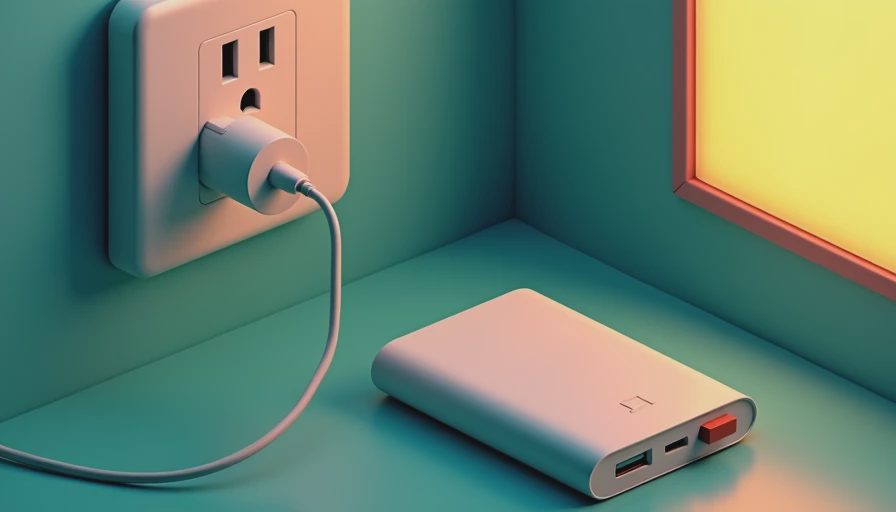
A standard power bank stores energy and sends it to your phone through a USB port. An outlet power bank adds a foldable or fixed AC plug, allowing the unit itself to charge directly from a wall socket. You do not need to pack a separate USB wall charger for the battery pack.
Most models also include USB-C, USB-A, or both. USB-C is the better choice for newer iPhones, Android phones, earbuds, tablets, and many compact laptops. USB-A is still useful if you have older cables, a smartwatch charger, or a short cable that has not been replaced yet.
Capacity is usually listed in milliamp-hours, or mAh. A compact 5,000 mAh model can provide a partial phone recharge, while a 10,000 mAh model is a more practical all-day option. A 20,000 mAh unit offers more reserve but is heavier and less pleasant in a pocket. Capacity is not the same as usable output because some energy is lost during voltage conversion.
The built-in plug is the real convenience. At a hotel, airport, coffee shop, or office, you can plug in the pack and connect your phone without hunting for a power brick. When you leave, you can unplug the same device and keep charging on the move.
Who should buy an outlet power bank
Here’s who this makes sense for: a commuter who starts with a full phone but spends two hours on trains, a sales worker moving between offices, or a traveler who wants one compact charger for a phone and earbuds. It is also useful for conference days, outdoor events, long drives, and work sessions in places with limited outlets.
A 10,000 mAh outlet power bank is the sensible middle ground for most people. It can often handle a full phone recharge and still leave enough energy for earbuds or a second top-up. Models from Anker, Belkin, UGREEN, and Baseus commonly target this space, with pricing often landing around $35 to $80 depending on charging speed, size, and brand support.
A smaller 5,000 mAh model can be easier to carry. It works well for someone who only needs an emergency boost from lunch until the end of the workday. The tradeoff is obvious: you get less battery reserve and fewer chances to recharge other devices.
A 20,000 mAh outlet power bank is better for tablets, multiple phones, or a weekend away from reliable outlets. Expect more weight, a larger body, and sometimes a higher price around $60 to $120. If your routine never stresses the extra capacity, do not pay for it.
Features that matter more than marketing
Start with output power. For a phone, 18W to 30W through USB-C is generally enough for quick everyday charging. Some newer premium models support 45W or more, which can help with tablets and compatible laptops. Higher wattage does not automatically make every device charge faster; the phone and cable must support the same charging standards.
Look for USB-C Power Delivery, commonly called USB-PD. It is a widely used charging standard that allows compatible devices and chargers to negotiate an appropriate power level. A charger that says “fast charging” without clearly listing its output is harder to evaluate.
Pass-through charging can be useful, but it is not a magic feature. It lets the battery pack charge while sending power to another device. That can work for a desk setup or overnight routine, but it may generate more heat and can reduce long-term battery convenience. I prefer using the outlet power bank as a normal charger unless pass-through solves a specific problem.
Safety protections matter too. Choose a product that lists safeguards for overcharging, overheating, short circuits, and excessive current. A reputable warranty and clear certification information are worth more than a dramatic capacity claim from an unknown marketplace seller.
The daily-use tradeoffs people miss
The wall plug adds convenience, but it also adds thickness. Some models are too bulky for a jeans pocket and can block the neighboring outlet on a power strip. If you frequently use airport or hotel outlets, a compact shape with a foldable plug is easier to live with.
Weight matters when the pack goes into a work bag every day. A 10,000 mAh outlet power bank may weigh roughly half a pound, while a 20,000 mAh version can approach a pound or more. That difference seems minor in a product listing but becomes noticeable beside a laptop, water bottle, and notebook.
Cable placement is another practical detail. A USB-C port on the side is usually easier to use while the pack sits on a table. A built-in cable can reduce clutter, but attached cables can wear out and limit compatibility. If you choose one, make sure the connector matches your phone and that the cable can be replaced or supplemented.
Also check whether the plug is positioned for real outlets. A poorly balanced design can sag from a loose wall socket. This sounds better on paper than it feels in daily use, especially when your phone is connected and the charging setup is hanging from an outlet near the floor.
How to choose the right capacity and size
Use your routine instead of choosing the largest number. For an occasional emergency, a 5,000 mAh outlet power bank keeps the bag light. For a full workday, 10,000 mAh is the safer recommendation. For travel with a tablet, phone, earbuds, and a camera accessory, 20,000 mAh gives you useful breathing room.
Think about where charging happens. If you usually plug in at your desk, a wall charger and a separate lightweight power bank may be cheaper and more flexible. If you move constantly, the combined design earns its extra bulk because it replaces two items.
For example, a driver who leaves home at 7 a.m. and returns after 7 p.m. may value a 10,000 mAh pack with a 20W USB-C port. A remote worker who visits coffee shops could prefer a model with two outputs. A frequent flyer should review airline rules before travel because spare lithium batteries are generally carried in cabin baggage, not checked luggage, and larger capacities can face additional limits.
Make a short checklist before buying: confirm USB-C output, check the wattage, compare weight, inspect the plug design, and read recent reviews for heat or connection complaints. Those details predict satisfaction better than a glossy product photo.
Common mistakes and a practical buying recommendation
The first mistake is buying capacity without considering portability. A 20,000 mAh outlet power bank that stays at home is less useful than a smaller model you actually carry. The second is assuming every USB-C port provides laptop-level power. Read the output table, not just the port count.
Another mistake is using a cheap, damaged, or poorly fitting cable. The cable can limit charging speed and create intermittent connections. Replace frayed cables promptly, and avoid charging a power bank under blankets or inside a tightly packed bag where heat cannot escape.
For most adults, I would start with a reputable 10,000 mAh model, a foldable wall plug, USB-C Power Delivery, at least 20W output, and a clear warranty. Anker and Belkin are common choices for buyers who prioritize established support. UGREEN and Baseus often offer competitive feature sets, but compare the exact model rather than assuming every product in a brand lineup performs the same way.
An outlet power bank will not replace every charger in your home. It is a convenience tool for the moments when your routine moves faster than your battery. If that happens several times a month, combining the wall plug and portable battery can reduce clutter and prevent the familiar low-battery scramble. If it rarely happens, a basic USB-C wall charger and a small power bank probably give you better value.