
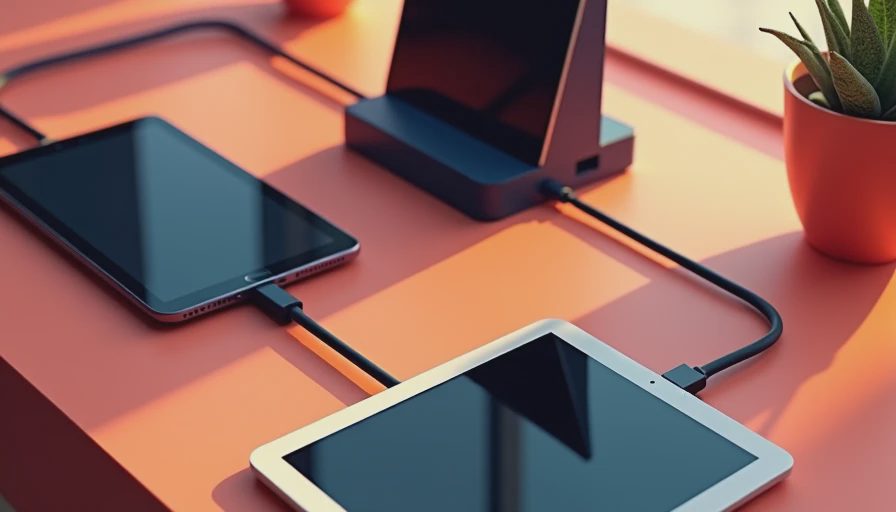
A multi ipad charging station can turn a messy counter, classroom shelf, or shared office table into a predictable charging spot. Instead of hunting for open outlets and matching loose cables, you place several iPads in one location and let them charge together. The idea is simple, but the buying decision is not. Some units are little wooden docks with a few USB ports, while others are enclosed carts designed for dozens of tablets. Buy for how you live, not for how the product looks on the spec sheet.
Start with the number of devices
The right capacity depends on your normal routine, not the largest number you can imagine. A household with two iPads probably does not need a 10-slot cabinet. A family with four tablets, two iPhones, and an Apple Watch might appreciate extra room because charging needs tend to grow over time. For a home setup, a four- to six-device dock is usually easier to place on a desk or kitchen counter than a large charging cart.
A small business, tutoring room, dental office, or classroom has different needs. If employees or students return devices at the end of the day, capacity and cable management matter more than attractive wood trim. An eight- or 10-slot multi ipad charging station can keep shared equipment together and make it obvious when something is missing. Leave at least one open slot if your collection is likely to expand within the next year.
Look closely at the slot width, too. A bare iPad fits differently from an iPad inside a rugged OtterBox or Logitech case. Narrow dividers can make a station frustrating when every tablet must be removed from its case before charging.

Charging speed matters, but advertised wattage is not everything
A charging station may list a high total wattage, yet that figure does not always mean every connected iPad receives fast charging at once. Some products divide available power across ports. Others use basic USB-A connections that are convenient but slower than USB-C Power Delivery. If you need tablets ready for a morning meeting, a station with clearly documented USB-C PD support is worth considering.
Check the charger included in the box. A dock with six charging cables is not a complete solution if it expects you to supply a large power adapter separately. An Apple 20W USB-C adapter can work well for one compatible device, but a multi-device setup needs a power supply designed for the station’s total demand. Belkin, Anker, Satechi, and UGREEN all sell charging accessories with different port combinations, so compare the actual output rather than choosing by brand name alone.
Speed also depends on the iPad model, cable, and battery condition. An older iPad will not charge like a newer iPad Pro simply because it sits in an expensive dock. If your routine only involves overnight charging, paying extra for maximum wattage may be wasted money.
Cable organization separates useful docks from clutter boxes
The best multi ipad charging station is not merely a power strip with dividers. It should keep cables short, easy to replace, and routed so connectors do not fall behind the furniture. Removable cable channels are especially useful because Apple has changed connector types across iPad generations. Older models use Lightning, while newer iPads use USB-C.
A station with fixed, proprietary cables can look tidy on day one and become a problem later. If one cable fails, you may have to replace a special part or abandon the dock. Standard USB-C and Lightning cables are easier to find at Best Buy, Amazon, or an electronics store. Look for enough clearance to plug in a cable without bending the connector sharply.
Cable length deserves practical attention. Six-foot cables sound flexible, but loose extra length creates loops that snag when you pull out a tablet. Short cables often produce a cleaner setup, provided the outlet or power brick is positioned close to the dock. Before ordering, measure the distance from the likely charging surface to the outlet.
Match the design to your space
A countertop dock works well in a kitchen, home office, or entryway. It lets you see every tablet and grab one quickly. The tradeoff is that it remains visible, so a plastic unit with bright indicator lights may feel out of place in a carefully organized room. Wood-finished docks can blend in better, but appearance should not hide weak ventilation or poor cable access.
For a classroom, clinic, or company, an enclosed charging cart may be the better tool. A cart can store, charge, and sometimes transport devices, while a cabinet-style multi ipad charging station offers more protection from accidental knocks. Look for locking doors, casters that roll smoothly, and vents that allow heat to escape. These features cost more, but replacing several damaged iPads costs far more.
Do not place any charging unit under a pile of papers or inside a cramped cabinet. Tablets and power adapters produce heat during charging. Open air around the power supply is a simple way to reduce unnecessary stress on the equipment.
Safety features are worth paying for in shared spaces
A station used by one adult at home has a different risk profile from one used by children or a rotating group of employees. For shared environments, prioritize overcurrent, overvoltage, and short-circuit protection. These features help manage abnormal electrical conditions, although they do not make a damaged cable safe to use.
Inspect cables every few weeks. Replace any cable with exposed wiring, a loose connector, or a plug that becomes unusually hot. Keep drinks away from the dock, and avoid daisy-chaining several power strips. A surge protector with enough capacity can add useful protection, but it should not be treated as a substitute for a well-designed charging system.
If a product feels unusually hot while charging a normal number of devices, unplug it and investigate. A warm adapter can be normal; excessive heat, a burning smell, buzzing, or discoloration is not. This is one reason I prefer a station with a reputable power supply and clear documentation over a bargain unit with impressive photos and vague specifications.
What should you spend?
Basic four-slot docks commonly land around $30 to $70. They make sense for a household that wants fewer loose cables but does not need advanced management. Midrange models with better dividers, USB-C output, and included adapters often cost $70 to $150. That range is where many home offices and small workgroups should start.
Large cabinets and charging carts can cost $200 to $800 or more, depending on capacity, locking hardware, wheels, and power management. They are justified when devices belong to a classroom, business, or organization and need a consistent storage process. They are overkill for two personal iPads sitting beside a sofa.
Before paying more, ask what problem the extra money solves. If the premium buys a sturdy enclosure, replaceable cables, and safer power distribution, it can be sensible. If it only adds glossy trim and a higher port count you will never use, skip it.
A simple buying process
First, count the devices that need charging on an ordinary evening. Next, identify the connectors you actually use and check whether cases must stay on. Then measure the available surface and outlet distance. After that, compare total output, included power adapters, slot width, ventilation, and cable replacement options.
Read customer photos for clues that product descriptions often omit. Look for comments about loose dividers, short cables, weak plugs, hot adapters, and tablets that do not fit with cases. A few minutes of this research can prevent a return and a second purchase. For most households, a compact multi ipad charging station with replaceable cables and four to six usable slots is the balanced choice.
Here’s who this makes sense for: anyone whose tablets currently charge in different rooms, borrow phone chargers, or disappear beneath papers on a desk. If your routine never involves more than one device, a single quality USB-C charger is simpler. But when several iPads need a home, a well-sized station can remove a small daily annoyance without turning your space into a charging warehouse.