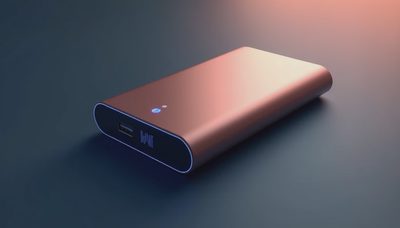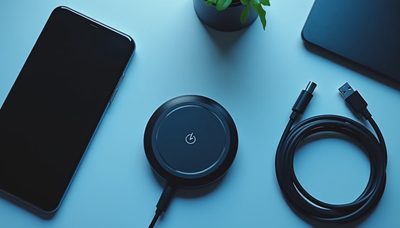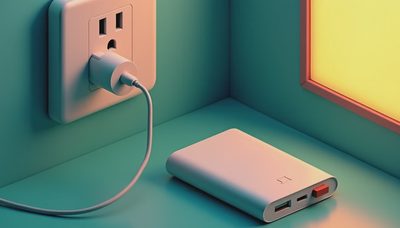

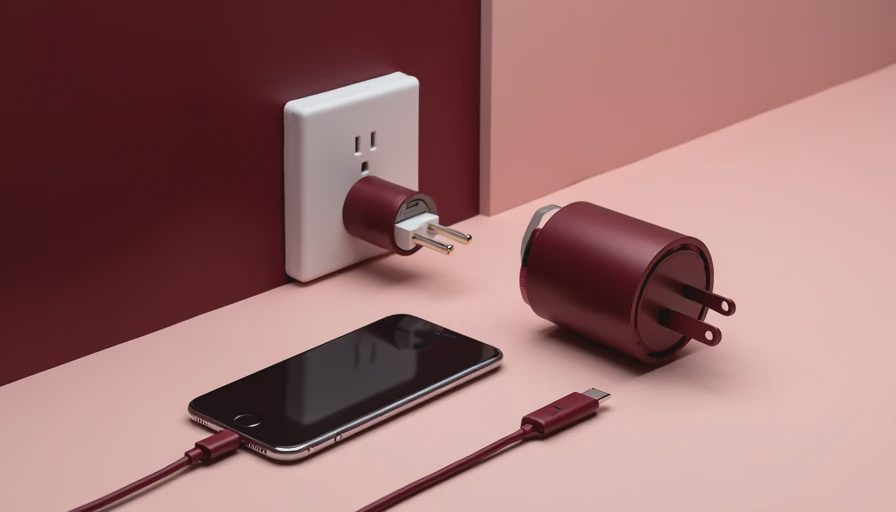
A power bank with AC plug combines a portable battery, wall charger, and usually several charging ports in one case. That sounds like a small convenience, but it can remove a surprisingly annoying part of daily tech: carrying a battery pack, charging brick, and separate cable bundle everywhere. For commuters, hybrid workers, and travelers, the right model can be genuinely useful. The wrong one is a heavy battery with a short built-in plug and too little output to charge your laptop.
Buy for how you live, not for how it looks on the spec sheet. The most important question is not whether the device has a high capacity number. It is whether you regularly need backup power away from an outlet and a wall charger when you finally find one.
Who should buy one?
A power bank with AC plug makes the most sense for people whose routines move between outlets. Imagine leaving home with a phone at 62 percent, working from a coffee shop, taking a train, and ending the day at a hotel. A conventional power bank helps during the trip, while a normal charger helps once you reach an outlet. An all-in-one unit handles both jobs without requiring another accessory.
It is also useful for short business trips. You can pack one unit for a phone, wireless earbuds, smartwatch, tablet, and possibly a lightweight laptop. At home, it can sit in a drawer as an emergency charger. At the airport, it can top off a phone while remaining ready to charge from the wall later.
This setup is less compelling if you work beside an outlet all day or already own a compact 10,000mAh battery and a small GaN wall charger. That two-device combination can be lighter and faster. The convenience here comes from consolidation, not magic charging performance.
The features that actually matter
Start with capacity, but do not stop there. A 10,000mAh model is generally easier to carry and can provide a useful phone recharge, depending on the phone, battery losses, and charging method. A 20,000mAh unit offers more breathing room for a long travel day, but it is usually heavier and less pocket-friendly. Many people will notice the size difference before they notice the extra capacity.
Next, check the AC plug design. A foldable plug is much easier to pack than a fixed, protruding plug. Look for a sturdy hinge that does not wobble when the unit is plugged into a crowded outlet. The plug should sit securely in the wall without forcing the battery to hang at an awkward angle.
Output is just as important. USB-C Power Delivery is the feature to prioritize. Around 20W to 30W is appropriate for many phones and tablets, while 45W or more is more useful for some ultrabooks. Do not assume a large battery automatically supports fast charging. Capacity and output describe different things.

Can it charge a laptop?
Sometimes, but this is where product pages can create confusion. A power bank with AC plug may advertise a large battery while offering only 18W or 20W through USB-C. That can charge a phone quickly, but it may charge a laptop slowly or simply maintain its battery during light use.
For a MacBook Air, a Chromebook, or a compatible Windows laptop, look for the laptop’s required USB-C charger wattage and compare it with the power bank’s output. A 45W or 65W unit is a better starting point for laptop use. Even then, demanding tasks such as video editing, gaming, or running a bright external display can consume power faster than the battery provides it.
There is another practical detail: some models have one USB-C port that both charges the battery and charges your device. Others reserve the AC plug for recharging and offer USB-C ports for output. Read the port diagram before buying. A product that cannot charge itself and your phone in the way you expect will create the exact clutter it was supposed to remove.
Weight, heat, and everyday comfort
The tradeoff for combining three accessories is physical bulk. A compact power bank with AC plug can weigh roughly half a pound, while larger laptop-friendly models may approach or exceed one pound. That is fine in a backpack, but it becomes irritating in a jacket pocket or small crossbody bag.
Heat is normal when a battery is charging or powering another device, especially when the unit is plugged into the wall at the same time. It should not become uncomfortably hot, smell unusual, or show damage. Avoid covering it with clothing or placing it under a pillow. Use a model from a reputable manufacturer with basic protections for overcurrent, overheating, overcharging, and short circuits.
Built-in cables are convenient, but they are also a possible failure point. A USB-C cable attached to the case can disappear from your packing list, yet replacement is not always possible if it frays. I prefer a model with at least one standard USB-C port even when it includes a built-in lead.
Comparing the three common setups
A traditional power bank is usually the best choice for maximum battery capacity at the lowest weight. It is ideal for a phone-first routine and can cost about $20 to $50 from established brands such as Anker, Belkin, or INIU. Add a compact GaN wall charger for another $20 to $60, and you have flexibility if one part fails.
A power bank with AC plug often costs around $40 to $100, depending on capacity, output, display, and brand. You pay more for fewer separate pieces. That can be worthwhile for business travel or commuting, where every small accessory creates another chance to forget something.
A dedicated portable power station is a different category. It can run larger electronics and offer AC outlets, but it is too bulky for most daily carry. If your goal is charging a phone, tablet, earbuds, and perhaps a laptop, do not buy a camping power station just because its capacity number looks impressive.
How to choose without overbuying
First, list the devices you actually carry. If the answer is phone, earbuds, and watch, prioritize low weight, a foldable plug, and 20W or greater USB-C output. If you add a tablet, choose more capacity and at least two useful output ports. If you add a laptop, begin with the laptop charger’s wattage rather than the battery’s marketing language.
Second, decide whether you need pass-through charging. This feature lets the unit recharge from the wall while sending power to another device. It can be convenient on a nightstand, but it may produce more heat and is not always supported at full speed. Treat it as a bonus unless your routine depends on charging several devices from one outlet.
Finally, check dimensions, airline rules, warranty information, and return terms. Most consumer power banks are designed around limits for portable lithium batteries, but very high-capacity models deserve extra attention before air travel. A clear return policy matters because comfort and port placement are difficult to judge from a product photo.
The bottom line
A power bank with AC plug is a smart consolidation purchase for people who commute, travel, or work in changing locations. It replaces a separate battery and wall charger while keeping your phone ready through a long day. It is not automatically better than two smaller accessories, and it is rarely the lightest solution.
Choose capacity for your real devices, USB-C output for your fastest charger, and a foldable plug for easier packing. If your routine never stresses the all-in-one feature, do not pay for it. But if you are constantly borrowing outlets and forgetting charging bricks, this category can make your daily carry noticeably simpler.