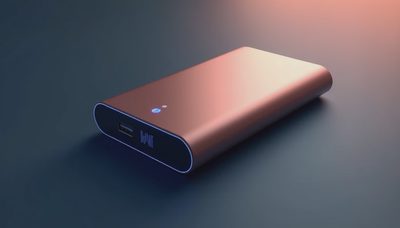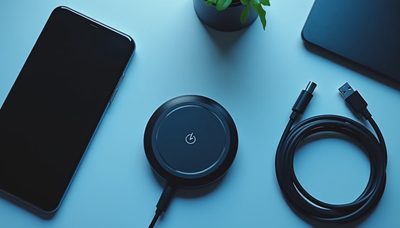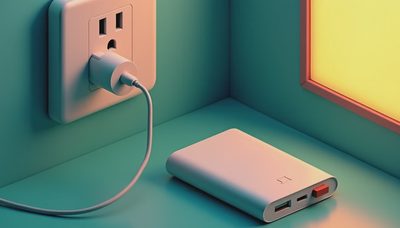

A cute portable charger can make a boring everyday item feel more personal, but appearance should not be the only reason you buy one. The best cute portable charger is small enough for your bag, powerful enough for your phone, and easy to use when you are rushing between work, travel, errands, or a workout. I have seen plenty of attractive power banks that look great in product photos and become annoying after a week. The goal is to find one that earns its space in your daily carry.
Start with the routine, not the color
Think about where your battery usually runs low. If you need a quick boost during a commute, a compact 5,000mAh model can be enough. It often adds roughly 50 to 80 percent to a modern phone, depending on the phone, cable, and charging losses. That is useful for maps, messages, music, and a few calls without carrying a brick.
For travel days, long conferences, or outdoor use, 10,000mAh is the more comfortable middle ground. It can provide one or more meaningful phone recharges while still fitting in a small purse, backpack pocket, or jacket. A 20,000mAh battery makes sense when you need to charge multiple devices, but it is heavier and less pleasant to carry every day. A cute portable charger should match your routine rather than forcing you to haul capacity you rarely use.
Size matters more than many shoppers expect. Compare the listed dimensions with your phone and case, not just a staged photograph. A power bank that fits beside your phone in a crossbody bag is much easier to live with than one that needs its own compartment.

Features that are actually worth paying for
Look first for USB-C input and output. USB-C makes it easier to use the same cable as many current iPhones, Android phones, tablets, and earbuds. Some models include a built-in USB-C cable, which is convenient, although that cable can become the weak point if it is short or permanently attached. A separate cable gives you more flexibility and is easier to replace.
Charging speed deserves plain-English attention. A 10W or 12W output is fine for topping up overnight or during a meeting, but it feels slow when you are trying to recover battery at an airport. Around 18W to 20W is a useful target for many phones. Newer models can support higher rates, but the phone, cable, and charger all need to support the same standard. A 65W label does not automatically make a power bank a better phone accessory.
If you use an iPhone with MagSafe, consider a magnetic wireless power bank. It can attach to the back of a compatible phone and eliminate a dangling cable. The tradeoff is efficiency: wireless charging generally wastes more energy as heat than wired charging, and a thick case can weaken the connection. For reliable speed, wired charging is still the practical choice.
Useful extras include a battery percentage display, pass-through charging, and multiple ports. Pass-through charging lets the bank and a connected device charge at the same time, but not every model handles that feature well. A simple four-light indicator is often enough for daily use, while a numeric display is helpful when you are planning a long trip.
Cute designs that do not feel childish
A cute portable charger does not have to look like a novelty toy. Soft colors, rounded edges, fabric textures, small patterns, and clean illustrations can add personality without making the accessory difficult to use at work. Anker, Belkin, Casely, and Sanrio-licensed accessories have all offered designs that appeal to shoppers who want something less plain than a black rectangle. Product availability changes, so focus on construction and charging details before a specific print.
Pay attention to the finish. Glossy plastic can show fingerprints and slide around on a desk. Matte plastic usually feels more secure, while silicone can provide grip but collect lint in a bag. A keychain-sized model may be charming, but it is usually designed for emergency power rather than a full recharge. A small indicator light also helps you avoid discovering an empty battery at the worst possible moment.
The best-looking model is still a poor purchase if its buttons are easy to press accidentally, its ports are recessed too deeply, or its cable blocks the phone screen. Pick up the practical details before getting attached to the pattern.

Safety and battery health
Buy from a recognizable brand or a retailer with a clear return policy. A power bank contains a lithium-ion battery, so basic protection matters. Look for overcharge, over-discharge, short-circuit, and temperature protection in the product specifications. You do not need to memorize the circuitry, but you should avoid suspiciously cheap models with vague listings, misspelled instructions, or no meaningful warranty information.
Do not use a swollen, cracked, leaking, or unusually hot battery. Keep power banks away from direct sunlight and do not leave one under blankets while charging. If a bank becomes hot during normal use, disconnect it and let it cool. A little warmth is common; excessive heat, a chemical smell, or physical deformation is not.
Capacity also declines with age and repeated charging. That is normal, but storing a power bank at full charge for months is not ideal. If it lives in an emergency kit, check it every few months and recharge it before a trip. Never put a damaged lithium battery in household trash. Use a local electronics recycling or battery drop-off program instead.
A simple buying checklist
Before ordering, answer five questions. First, do you need a quick emergency boost or a full day of backup? Choose 5,000mAh for light carry and 10,000mAh for more dependable travel use. Second, which connector does your phone use? USB-C is the most flexible option, while an integrated Lightning connection can be convenient for some older iPhone setups.
Third, will you charge one device or several? One USB-C port keeps the design compact; two or more ports add flexibility but usually increase size. Fourth, do you need wireless attachment? Magnetic charging is convenient, but it is not the fastest option. Fifth, will the charger spend most of its life in a pocket, purse, desk drawer, or carry-on? That answer should guide size, grip, and durability more than the product photo.
A good cute portable charger for a commuter might be a 5,000mAh magnetic model in a slim case-friendly shape. A frequent traveler may be happier with a 10,000mAh USB-C model from Anker or Belkin, even if it is less decorative. Someone carrying earbuds and a phone can prioritize two ports over a flashy display.
What I would buy for different users
For the minimalist, I would choose a compact 5,000mAh bank with USB-C input and output, a protected power button, and a matte finish. It disappears into a small bag and handles the most common emergency. For a hybrid worker, a 10,000mAh model with 20W output is the better balance because it can cover a long afternoon away from an outlet without becoming desk clutter.
For a traveler, I would prioritize a reputable 10,000mAh or 20,000mAh model, clear capacity indicators, and a durable cable over decorative extras. Check airline rules before flying; spare lithium batteries generally belong in carry-on baggage, not checked luggage, and higher-capacity models can have additional restrictions.
For a gift, design can lead the decision, but confirm the charging specifications before checkout. A cute portable charger becomes a useful gift when it combines a fun finish with USB-C, sensible capacity, and a return option. Buy for how you live, not for how it looks on the spec sheet. When the style and the practical details agree, this is one accessory you will actually remember to carry.