The targus 100w usb-c portable power bank is aimed at people who need more than an emergency phone boost. It is the kind of accessory that makes sense for a commuter carrying a laptop, a hybrid worker moving between rooms, or a traveler who does not want to hunt for an open outlet. The important question is not whether 100W sounds impressive. It is whether your devices, cables, and daily routine can actually use that output.
A high-output power bank can simplify a bag, but it can also become an expensive brick that rarely leaves a desk drawer. Buy for how you live, not for how it looks on the spec sheet. If your routine includes a USB-C laptop, tablet, phone, earbuds, and a long stretch away from a wall charger, this category deserves a close look.
What the targus 100w usb-c portable power bank is built to do
The main attraction is USB-C Power Delivery output up to 100 watts, assuming the connected device, cable, and battery pack all support the required charging profile. That is enough power for many USB-C laptops and tablets, not just phones. A phone connected to a capable port will typically draw only what it needs, so the 100W rating does not force 100W into every device.
This distinction matters. A MacBook Air, many Windows ultrabooks, an iPad Pro, and modern Android phones can benefit from USB-C charging, but their actual requirements differ. Some laptops charge comfortably below 65W, while larger performance notebooks can need more power under heavy use. A 100W label does not automatically mean every laptop will charge quickly while running demanding software.
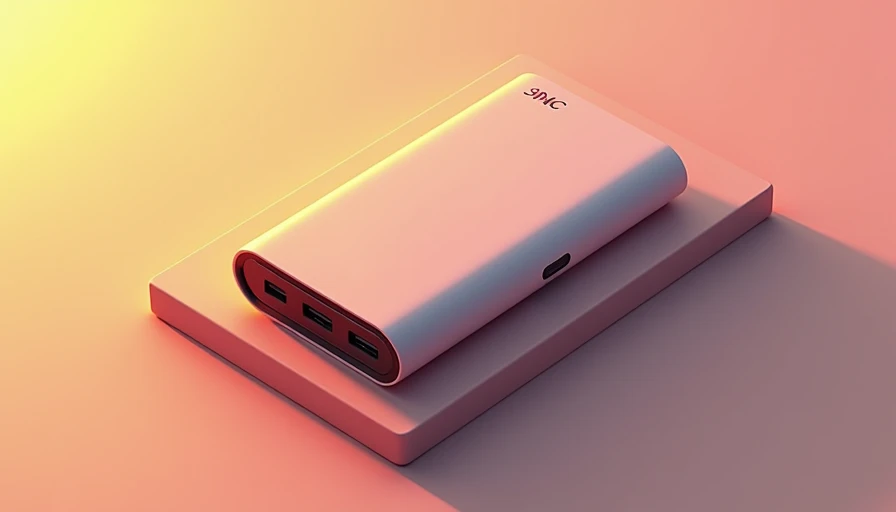
The targus 100w usb-c portable power bank should therefore be viewed as a flexible source for compatible gear rather than a universal laptop charger. Check the product listing for its exact port layout, input speed, battery capacity, and whether the full output is available from one port or shared between multiple ports.
A second practical detail is cable quality. For output near 100W, use a USB-C cable rated for high-power charging, commonly identified as a 5A cable with an e-marker. An ordinary phone cable can work for lower wattage, but it may limit charging speed. This is one of those small setup details that creates a false impression that the power bank is underperforming.

Who should buy the targus 100w usb-c portable power bank?
Here’s who this makes sense for: someone whose main device is charged through USB-C and whose day regularly exceeds battery life. Imagine starting with a laptop at 80 percent, taking a train into the office, spending four hours in meetings, and then working from a coffee shop without a dependable outlet. A high-output pack can preserve working time without requiring a complete shutdown.
It is also useful for travel days. Airports, convention centers, and hotel lobbies often have outlets, but they are not always near the seat you want. A portable pack lets you top up a phone while using navigation, keep wireless earbuds ready, and give a tablet enough energy for a flight. The convenience is greater when one pack can replace a separate phone battery and a small laptop charger.
The targus 100w usb-c portable power bank is less compelling for someone who only needs to recharge an iPhone, Pixel, Galaxy phone, or earbuds once during the day. A smaller 10,000mAh pack can be lighter, cheaper, and easier to carry. If your routine never stresses this feature, do not pay for it. High output is valuable when it solves a real charging problem, not simply because the number is larger.
Weight is another tradeoff. A battery large enough to provide meaningful laptop runtime will usually feel heavier than a slim phone-only power bank. That is acceptable in a work backpack, but less attractive in running shorts, a small purse, or a minimalist day bag.
What to check before ordering
Start with the exact battery capacity, usually listed in watt-hours or milliamp-hours. Capacity tells you more about how long the pack can support a device than output alone. A pack can offer 100W briefly but still provide limited total energy. Conversion losses also mean the energy reaching your laptop will be lower than the battery’s advertised maximum.
Next, inspect the port arrangement. Some power banks have one high-output USB-C port plus additional lower-output USB-C or USB-A ports. Others reduce the main port’s power when a second device is connected. If you plan to charge a laptop and phone together, find the combined-output details before purchasing.
The targus 100w usb-c portable power bank should also be compared on recharge time. A large battery can take several hours to refill, especially with a basic wall adapter. If the package does not include a suitable charger, the total cost may rise by $30 to $70 for a reputable USB-C wall charger and cable.
Look for clear safety information, temperature protection, overcharge protection, and a battery indicator that is easy to read. A percentage display is more useful than four vague lights when you are deciding whether the pack can support a two-hour presentation.

Everyday performance and charging expectations
In daily use, do not expect a simple one-to-one exchange between the battery pack’s advertised capacity and your laptop’s battery percentage. Power moves through charging circuits, and some energy is lost as heat. Laptop size, screen brightness, processor activity, and whether the computer is asleep all affect the result.
For the targus 100w usb-c portable power bank, the best use case is often topping up during lighter work rather than pretending it is a replacement wall outlet. Plug in during email, document editing, or a video call, and the laptop can gain useful runtime while you continue working. Heavy gaming, video exports, or engineering software can consume power faster than the pack supplies it.
The pack may also become warm during high-output charging. Warmth is normal, but keep it on a hard, uncovered surface rather than under clothing or inside a packed bag. Avoid leaving lithium-ion batteries in a hot car, and follow the manufacturer’s storage and travel guidance.
Targus versus smaller alternatives
A compact 20W or 30W phone bank often costs roughly $25 to $60 and weighs much less. It is the sensible choice for a phone-first routine. A 65W laptop power bank generally sits in the middle, offering enough output for many ultraportables while saving some weight and money. A 100W model is the stronger choice when you carry a laptop that benefits from faster USB-C charging or want more flexibility across devices.
That does not make the targus 100w usb-c portable power bank automatically better. It makes it more specialized. Compare the price against a Targus, Anker, UGREEN, or Baseus alternative with similar capacity, port support, warranty terms, and safety information. A cheaper pack can be a good deal, but only when its real output and recharge behavior match your needs.
A simple setup checklist
Before the first workday, charge the power bank fully with a compatible USB-C wall charger. Test it with your laptop and note whether the computer shows “charging” while in use. Try the same test with your phone connected to another port if simultaneous charging matters. Then place the correct high-power cable in the same pouch so the useful accessory does not get separated from the battery.
The targus 100w usb-c portable power bank earns its space when it replaces several chargers and protects your workday from low-battery interruptions. It is a practical purchase for USB-C laptop users, frequent travelers, and hybrid workers. For occasional phone charging, choose smaller and lighter. The right answer comes from your routine, not from chasing the biggest number on the package.